
Residential construction · Operations platform
An operations platform for a residential builder
We built a residential construction company an internal operations platform for leads, projects, contacts, tasks, quotes, schedules, and field use — built around how their team actually works.
A residential builder's work lives across four states at once: someone curious but not yet committed, a real lead, an active project, and a finished job that still needs field follow-up. Each state has its own set of conversations and its own way of getting lost.
We built them a platform that holds all four states in the same system.
The shape of it
- Inquiries — brand-new names that may or may not be real. Triage before they become leads.
- Leads — engaged prospects working through quoting and pre-sale conversations
- Projects — active builds with tasks, quotes, schedules, and field updates
- Contacts — the long tail of clients, vendors, subs, and referrers behind everything else
Each module connects to the next so a person moves through the system without losing context. An inquiry becomes a lead. A lead becomes a project. A project keeps a contact record alive long after the build is done.
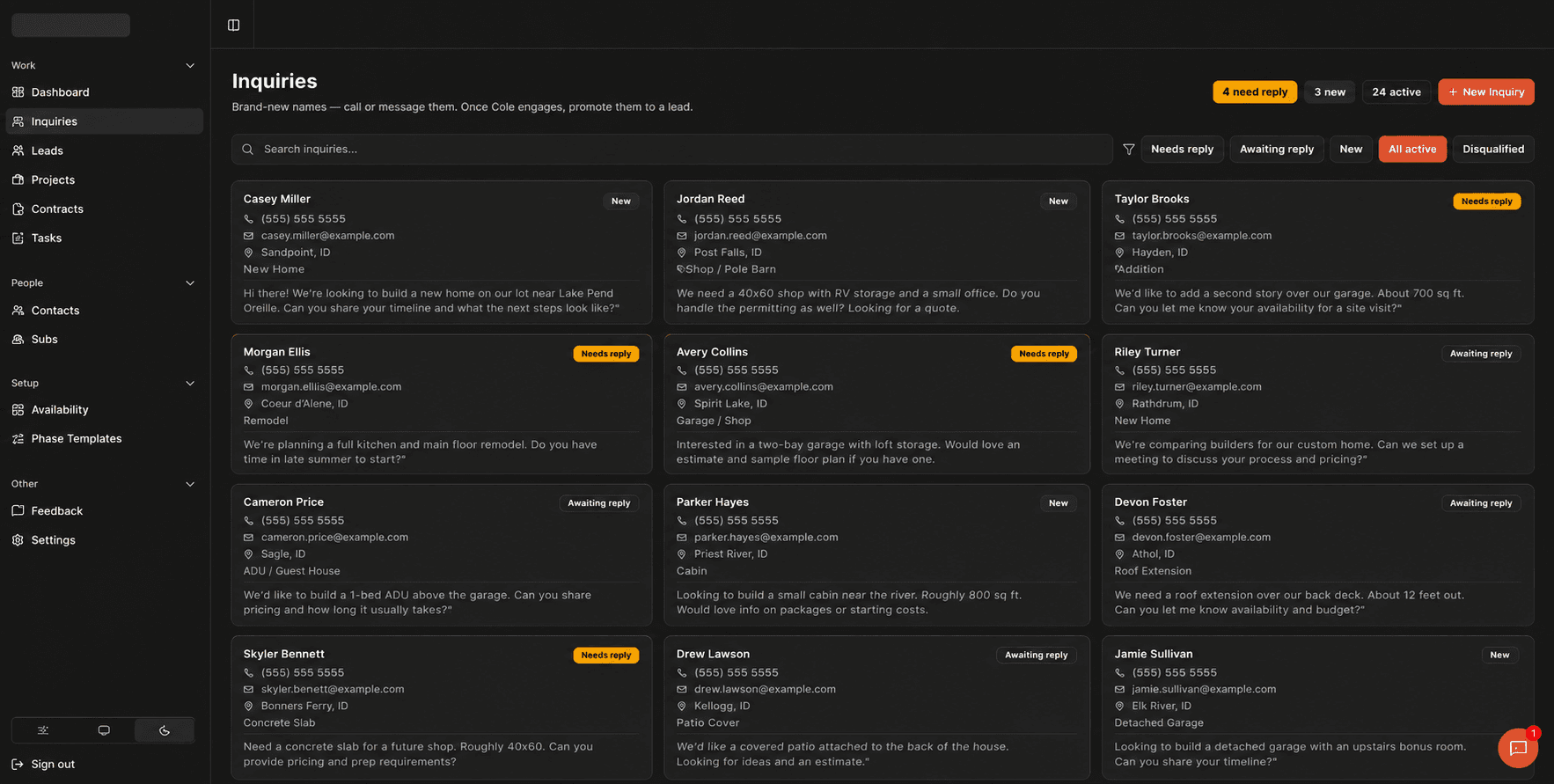
The Inquiries view (pictured)
When a name comes in, it lands in the Inquiries queue with whatever context the form or phone call captured. The team reviews each one and decides:
- Assess reply — read the inquiry, decide if it's worth pursuing
- Reply ready — drafted response waiting to send
- OK active — engaged, about to promote to a lead
- Mark contacted — outreach sent, awaiting response
The queue stays small on purpose. Inquiries that don't engage drop off. Inquiries that do engage promote to leads. The team isn't drowning in inputs; they're working through a triage list.
The rest
- Tasks with assignment, priority, and field-use views
- Quotes that pull from project context
- Calendar and availability for scheduling
- Inbox for centralized comms
- Phone templates for repeat conversations
- Feedback for closing the loop after a build
Why a platform, not a stack
A builder running on a stack of disconnected tools spends more time copy-pasting than building. This platform is opinionated about not doing that. One contact record. One project record. One source of truth the whole team learns once.
It is a lot of moving parts for one small business. But the alternative — five separate tools and all the seams between them — is what got them here in the first place.